
The Architect

I try to identify the idea or event that’s behind any story I write, but I can’t with this one. I found it in a pile of papers to throw out. I think I wrote it in 1995 because that’s the date in the story, but I’m only guessing. And that’s a strange time because it’s before I started writing fiction for publication. I find it interesting to read something from so long ago. It does have a different flavor from how I write today…at least, I think so. Anyway, tell me what you think.
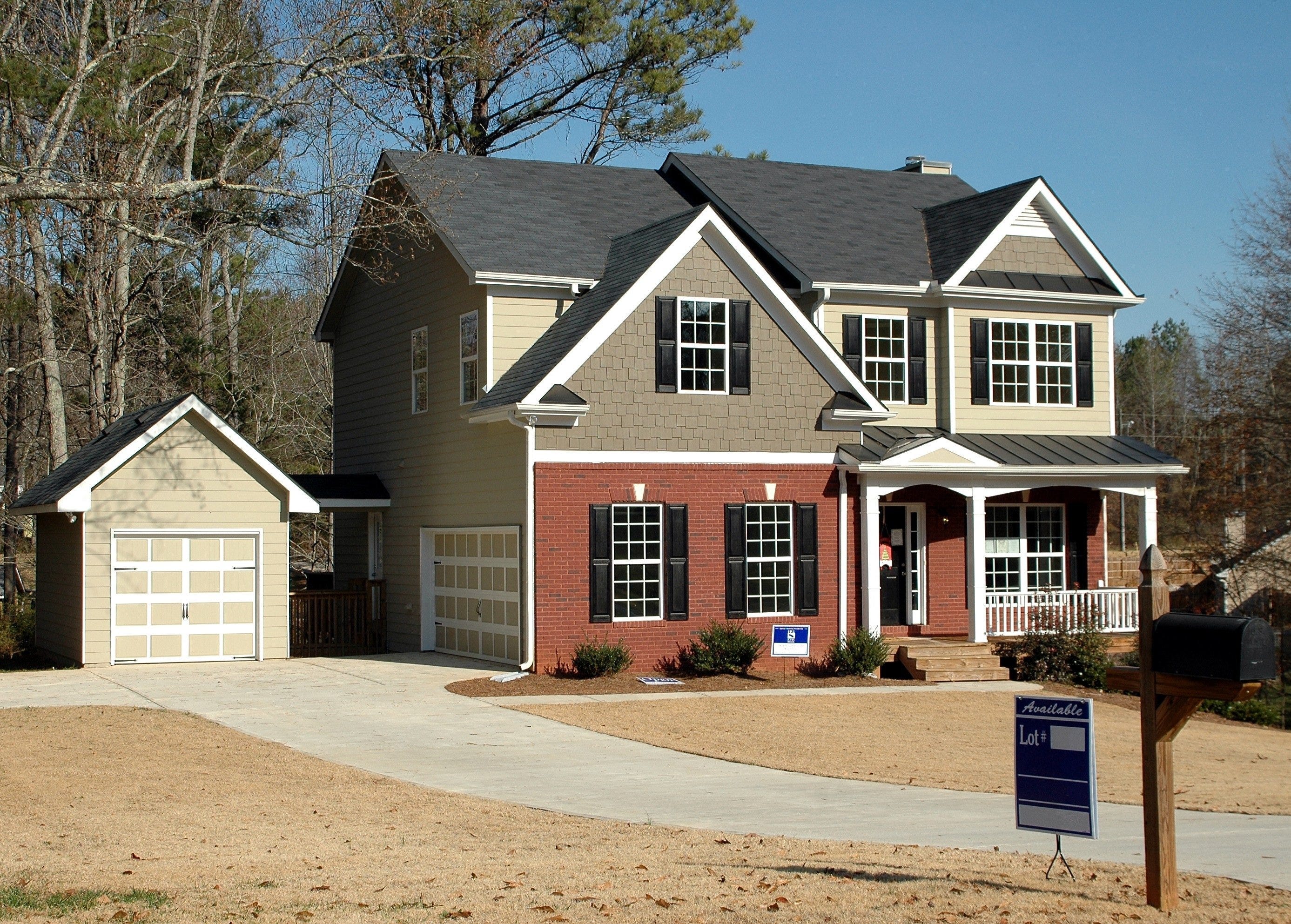
Image by Paul Brennan from Pixabay
The Architect
I knew I was in trouble the day Martin announced that our house no longer suited his image. He didn’t use those exact words, but the message was clear. He wanted—no, he absolutely demanded—something more impressive. To quote him, “We’ve outgrown maple and oak.”
I glanced at the Ethan Allen coffee table and the needlepoint pillow from Gran’s nimble fingers. “I don’t see anything wrong with the way our house looks, Martin. It’s homey.”
“I’m tired of homey.” He gripped my shoulders and turned me to face him. “Look, Kara, it’s important. In the next couple of years, I expect to make a full partnership, and I’ll need to entertain lots of VIP’s. This”—he gestured around the room with a sweep of his hand—“won’t cut it. At least give it some thought, okay?”
“I’ll think about it.”
“Good. And here’s someone to help you.” He produced a card from his vest pocket.
“Who’s this?”
“An architect. Brad Newberry used him, and his place is dynamic.”
“Dynamic.” The word came out like a wrong note in a song. I’d seen Brad’s house, and dynamic wasn’t the first adjective that leapt to mind. Sterile, on the other hand, was.
“You’ll call him next week, right?”
It was better to remain mute.
The following week, I found myself seated in a large room filled with chrome and black glass tables. Bright light flooded through a series of rectangular skylights and the floor-to-ceiling windows lining one wall. I removed my sunglasses only to put them back on again immediately.
The architect who sat across from me continued to try to impress me with his collection of successful designs. He called them “concepts.”
“Here’s one I think you’ll like, Mrs. Freeman,” he said, holding up an 8 x 10 glossy of what I at first took to be a white mushroom nestled under a protective wing.
“Interesting.” I nodded.
“Earth sheltered. Very dramatic and yet functional.”
During the past half hour, most of the houses he’d shown me from his files hovered near reality with only subtle hints of their orbiting capacities. This man definitely had a different view of housing design than I did, and the question in my mind became, “How am I going to turn this conversation back to mundane considerations like closet space and a separate dining room?”
“Well, I think you’ve seen enough to give you an idea of the kind of work I’m capable of creating for my clients.”
“Definitely. I don’t need more.”
“Fine. Then how do we begin?”
“Begin?” That came out as a croak.
“You’re nervous about this venture, aren’t you, Mrs. Freeman?” He smiled and peered at me from behind the white mushroom, which he still held up for view.
“A little,” I admitted as I shifted to settle more deeply into the chair that resembled a nesting crane.
“Need more time?”
“A little.” My needle seemed to be set to repeat. Perhaps it was because I was transfixed by the mushroom. It began to take on different dimensions during this part of the conversation. The sun had shifted in one of the skylights. A steady beam spotlighted the center of the picture, making the house glow. I stared at it as it throbbed, then puffed itself into a giant cloud and threatened to burst the confines of its 8 X 10 inch border. I tensed for the explosion and pressed back into the chrome and leather bird. At the last moment, the architect dropped the picture back into its file and we escaped destruction.
“Mrs. Freeman, are you all right?”
“Yes. Of course,” I said, snapping out of my trance.
“Why don’t we discuss our plans over lunch? You may feel more at ease if we take this project slowly over a nice glass of wine?”
“Excuse me. I’m sorry, but I want to talk to my husband about your...concepts.”
“Certainly. I understand. You do that, and then we’ll all get together.” He stood and walked around his desk.
“Thank you. That sounds like a good way to proceed,” I managed to say as I groped my way up from the clutches of the mutant crane and stepped backward toward the door.
“Give me a call when you’re ready,” he said, showing his teeth and shutting me out into the lobby.
Mushrooms and spaceships! Where was the Hoosier cabinet and the American eagle over the front door going to fit in? I’d need a special history hall.
That night, I explained to Martin that I didn’t feel comfortable with his architect, and after an hour of giving reasons why I couldn’t live in any house that the man designed, I ran out of things to say.
“So does this mean you’re quitting?” Martin asked.
“Quitting? No. Quitting is not the American way. I’ll find another architect.” But I sounded half-hearted.
“Kara.”
“I promise.” And I meant it.
I launched a careful search for an architect who lived and believed in this century and who wouldn’t laugh when I suggested a bay window. I finally found him on the 21st of May, 1995, at 12:02 pm.
That morning, I’d hopped into my Volvo and jotted down a list of architectural firms and a few errands before backing out of the driveway.
See two architects on Basin Street. Pick up shirts at the laundry. Get milk, bread, and dog food. Pick up Steven at soccer practice.
I’d driven a few blocks when I remembered I had something else to do, so when the traffic stopped, I held the list over the wheel and added, post office.
That notation shot off the notepad and landed along with me on the dashboard. Between Main Street and Grand Avenue, the trunk of the car ahead of me and my radiator had created an obsession for one another. Kevin Paterson and I had met.
He creaked open the door of his car, slowly sliding out from behind the wheel, then stepped onto the pavement and walked in my direction.
As the pair of Nikes approached, I was grateful he still had two feet; I hadn’t maimed the man. He stood next to my car, and I rolled the window down.
“Is this a Kamikaze mission?” he asked.
“Not an intentional one. I’m sorry. My foot must have let up on the brake. A matter of a slippery shoe?”
He looked me in the eye. I recognized a rare phenomenon—a man with a sense of humor.
“Your insurance agent or mine?” He smiled.
After we’d dealt with the realities of money and fault, we adjourned to Lupe’s, the best Mexican restaurant in town, for Margaritas. It seemed the civilized thing to do.
“You’re not!” I shouted over the buzz of conversations in the bar.
“I am,” Kevin affirmed. “I am an architect.”
“I’ve been looking for someone like you for months!”
“Here I am.”
I explained Martin’s idea and my problem with it.
“Hmm. So what kind of house do you want?”
There it was again. That question. The house I wanted, I already lived in. “You are asking the wrong thing.”
“Oh?”
“I can show you the house I want because I already have it.”
He sipped his drink, returned his glass to the bar, and took a deep breath. “This isn’t going to be easy, is it?”
“No.”
“I’ll need a large retainer.”
“Okay.”
He laughed, shaking his head.
“What does that mean?”
“It means that I’ll design you a new house. I’ll design you one as close to what you already live in, but with Martin’s request in mind. Give me some clues to start.”
“I want something, you know, modern, but not too modern. No mushrooms, and if you ever say the word concept, we’re through.”
“I see. You’ve discussed this project with someone else. Are you difficult to work with?” He leaned back and looked at me from a different perspective.
“No. Not exactly.”
“Which means?”
“My husband says I’m old-fashioned. But when he says it, it sounds rather...bad.”
“Hmm. Do you always pick up architects by running into their cars, or am I a special case?”
I looked at the man carefully before I said. “I...” I began and then switched to a direct answer. “You’re special.”
“Good. You finally got an answer right to one of my questions.”
The house took exactly two years to complete from that first meeting. Kevin designed it, oversaw the building of it, asked me to marry him, then disappeared when I said I couldn’t. Martin. Our son. Fifteen years of marriage. My husband was right; I was old-fashioned, and from that time on, he didn’t mention it again.
We never moved into the new house. We sold it six months after it was finished, and made a nice profit. I didn’t hear from Kevin after that, and I felt a terrible loss. He was my friend. I think I loved him.
I know he loved me because the house was a three-thousand-square-foot love letter. Even Martin knew that, although he never said anything.
So, in the end, I had my way.
I stayed where I wanted.
The End

@Evernight Teen
My latest writing is about witches and ghosts in search of help. Quite the departure from The Architect, heh? But it does have a house that plays a prominent part, so there is one similarity. Here’s a short bit from That Moonwater Witch. It’s part of a scene in which the heroine has almost accomplished one favor for a departed villager. Calista, the heroine, has to hide to avoid being caught inside Minnie Wakefield’s, and apparently, stealing a diary, something this ghost didn’t want anyone to see.
Interesting story. Very different from what you've been writing.
Ohhhh! What a sad ending. Too old-fashioned for true love. Sigh.